



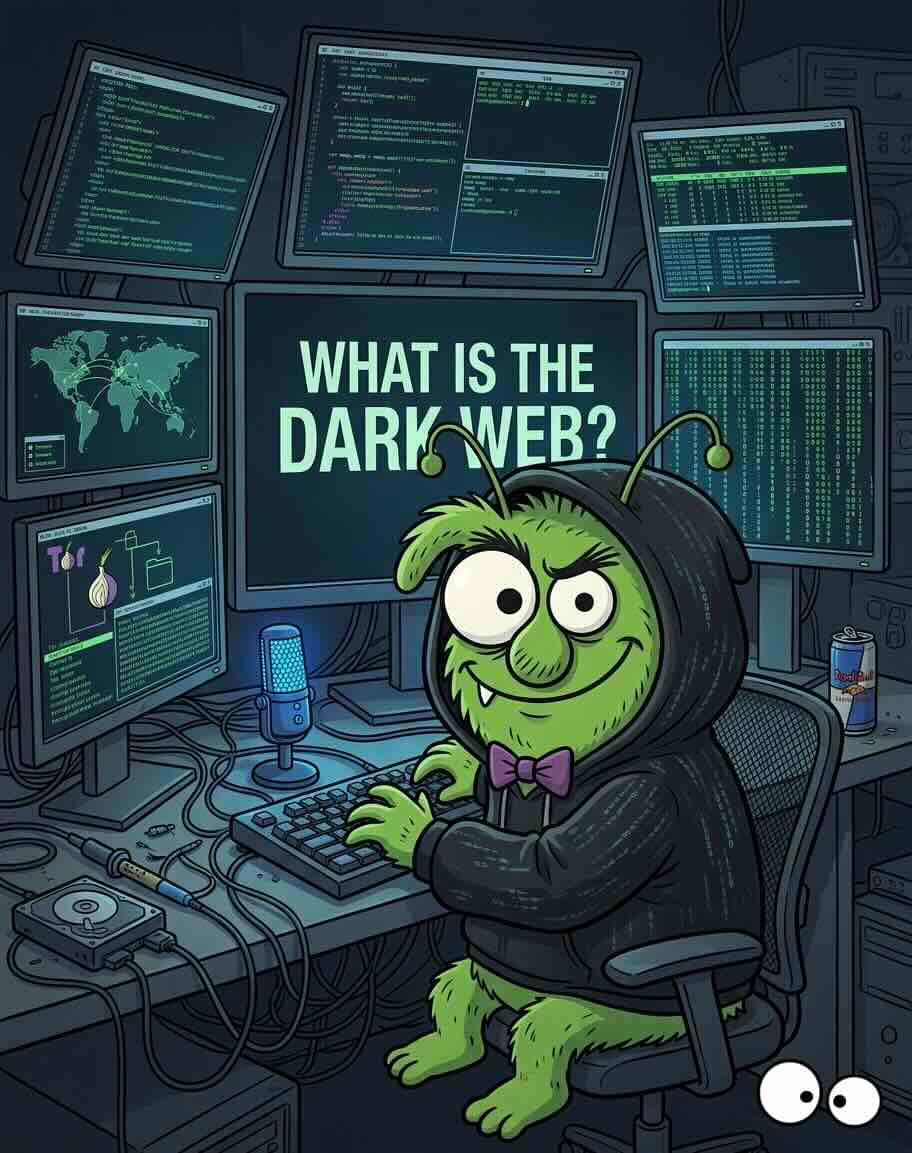
The Dark Web is often portrayed as a digital underworld, but its reality is a fascinating mix of government engineering, high-level cryptography, and extreme privacy. To understand it, we have to peel back the layers—starting with the fact that the very people who police it are the ones who built it.
In a twist of irony, the backbone of the Dark Web—the Tor (The Onion Router) network—was originally developed by researchers at the U.S. Naval Research Laboratory in the mid-1990s. The goal was to create a way for intelligence operatives to communicate online without being tracked by foreign adversaries. To make the "spies" invisible, the network needed "noise"—regular users whose traffic would mask the sensitive data. This is why the network remains public and decentralized today.
The Dark Web doesn't exist on a separate internet; it uses the same cables and routers we use for everything else. However, it uses Onion Routing to stay hidden:
While the Dark Web is home to illicit marketplaces, it is also a vital tool for various legitimate groups:
You cannot reach the Dark Web through Safari, Chrome, or Google Search. It requires specialized software, the most common being the Tor Browser. These sites do not end in .com or .org; they use .onion domains, which are cryptographic keys generated by the software itself rather than bought from a registrar like GoDaddy.
In most democratic countries, simply accessing the Dark Web is perfectly legal. It is a privacy tool. However, the laws of the physical world still apply—illegal transactions and activities remain illegal, regardless of the browser used to conduct them.